

Your bite feels off. Your jaw clicks. Your neck and shoulders feel stiff.
These symptoms may involve more than just the teeth and jaw. Tongue posture, breathing, and body alignment can also play a role.
We spoke with Dr Choo about Myofunctional Therapy (MFT), Craniosacral Therapy (CST), and why dentists may work alongside bodywork practitioners.
Contents
What Are Craniosacral Therapy and Myofunctional Therapy?
CST and MFT share one thing: neither looks at the mouth and jaw in isolation. Their methods and goals, however, are quite different.
| Aspect | Craniosacral Therapy | Myofunctional Therapy |
|---|---|---|
| Method | Light touch from a practitioner | Exercises done by the person |
| Main focus | Head, neck, back, sacrum | Tongue, lips, cheeks; breathing and swallowing |
| Goal | Complementary care addressing bodily tension | Reviewing oral function and daily habits |
| Format | Regular sessions | Home practice plus periodic check-ins |
The Basics of Craniosacral Therapy
Craniosacral Therapy treats the area from the head down to the sacrum as one connected system, working through very light contact. There is no forceful pressing or adjusting — the practitioner rests their hands gently on the head, neck, back, or sacrum.
In a dental context, the interest lies in tension around the jaw and neck. That said, the effects and mechanisms of CST are not well established. It is not a substitute for medical treatment, and is best understood as complementary care.
The Basics of Myofunctional Therapy
Myofunctional Therapy is training that reviews how the tongue, lips, and cheeks move, along with breathing and swallowing habits. Unlike a hands-on treatment, it depends on consistent practice at home.
The main points assessed include:
- Resting position of the tongue and lips
- Whether nasal breathing comes easily
- Swallowing and chewing patterns
- Mouth movement during speech
MFT is sometimes used alongside orthodontic treatment, though results vary from person to person.
Interview with a Dentist
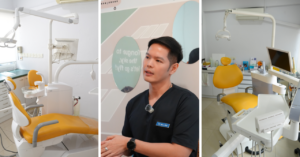
We spoke with Dr Wil Liam Choo, a dentist at Whitezone Dental Clinic Universiti Malaya.
Website: Whitezone Dental Clinic
What is Myofunctional Therapy, and why does it matter for children?
In short, it’s something like physical therapy for the muscles of the face and mouth. “Myo” means muscle; “functional” means working correctly.
It matters most for children because the face and jaw are still growing — and that jaw is under constant force from the tongue, lips, and cheeks.
We’re aiming for four things:
- Establishing nasal breathing
- Keeping the lips comfortably closed, including during sleep
- Resting the tongue in its correct position
- Swallowing naturally, without the whole face moving
When these fall into place, the balance of forces on the jaw changes — and I believe that guides facial and dental growth in a better direction.
What led you to see factors beyond the bite as relevant to symptoms?
Mouth breathing in children is the clearest example. You’ll often see a narrow jaw, crowded teeth, and a tongue that isn’t sitting where it should.
But the mouth isn’t the whole picture. When someone breathes through the mouth, the head tends to shift forward to keep the airway open.
- A mouth-breathing habit develops
- Jaw shape and tongue position change
- The head moves forward to maintain the airway
- Whole-body posture follows
- Symptoms may appear in the neck, shoulders, or back
At that point, dentistry alone isn’t enough. you need a practitioner who specialises in the body.
Why would a dentist recommend Craniosacral Therapy?
Not every dentist does. Because my focus is oral function and the airway, I tend to look at the patient as a whole body.
Take someone with a severe tongue-tie: neck pain and postural changes often show up alongside it. But treating the neck or posture itself isn’t a dentist’s role. That’s where working with a CST practitioner comes in.
I handle the mouth; the practitioner works on the body. Together, we’re aiming for the patient to feel better overall.
*this reflects what I’ve observed clinically, not effects confirmed by research data.
Summary

CST and MFT differ in both purpose and approach. Three takeaways:
- CST: complementary bodywork using light touch
- MFT: training that addresses tongue, lip, and cheek function, plus breathing and swallowing
- Collaboration: when the mouth alone doesn’t explain the problem, dentists may work with specialists in other fields
Different concerns call for different things to check:
| What you’re noticing | Worth looking at |
|---|---|
| Your bite won’t stay stable | Tongue position and breathing habits |
| Jaw clicks or won’t open easily | Tension around the head and neck |
| Ongoing neck and shoulder stiffness | Head position and overall posture |
| Concerns about a child’s teeth | Nasal breathing and lip closure |
The key is not to explain every symptom through bite or posture alone. If symptoms persist, start by having a dentist or physician identify the cause, then consider complementary care as needed.
At Therapia, we offer complementary care through Craniosacral Therapy, with attention to the state of the body as a whole.
For questions about teeth, jaw, or airway, contact Whitezone Dental Clinic Universiti Malaya, where Dr Wil Liam Choo practises with oral function and the airway in mind.
Website: Whitezone Dental Clinic