
Contents
What Is Craniosacral Therapy?
The Basic Concept of Craniosacral Therapy
Craniosacral Therapy, commonly known as CST, is a gentle hands-on practice used as a form of complementary care. Unlike deep massage or forceful manipulation, practitioners use very light touch around areas such as the head, neck, spine, pelvis, and sacrum.
CST looks at the body as an interconnected system rather than focusing only on one area of discomfort. It is also commonly discussed in relation to fascia, the connective tissue surrounding muscles, nerves, blood vessels, and organs.
Sessions are generally designed to provide gentle bodywork in a calm environment and support relaxation. CST should be considered complementary care and should not replace medical diagnosis, treatment, or advice from qualified healthcare professionals.
How Does Craniosacral Therapy Work?
During a CST session, the practitioner gently places their hands on areas such as the head, neck, spine, pelvis, and sacrum. Rather than applying strong pressure, the hands may remain in one position for a period of time while the practitioner observes how the body responds.
Traditional explanations of CST sometimes refer to concepts such as craniosacral rhythm and the movement of cerebrospinal fluid. However, these proposed mechanisms have not been firmly established by modern clinical research.
For this reason, CST is best understood as a gentle complementary hands-on practice. For many people, a session provides an opportunity to slow down, become more aware of physical tension, and relax in a quiet environment.
How Does a Practitioner Touch the Body During CST?
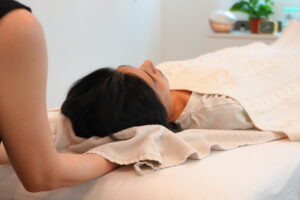
One of the main characteristics of CST is its very gentle physical contact. Clients usually remain fully clothed and lie comfortably on a treatment table while the practitioner places their hands around areas such as the head, neck, shoulders, spine, pelvis, or sacrum.
Unlike traditional massage, CST does not usually involve continuous rubbing or kneading. The practitioner’s hands may remain still or move slowly while maintaining light contact.
Some people report feeling relaxed, warm, heavy, or sleepy during a session, while others notice very little sensation. Experiences vary, and you should always tell the practitioner if anything feels uncomfortable.
How Is Craniosacral Therapy Different From Massage and Other Hands-on Therapies?
CST, massage, chiropractic care, and physiotherapy may all involve physical contact, but their techniques and purposes are different.
| Therapy | Typical Approach | Common Focus |
|---|---|---|
| Craniosacral Therapy | Very light and sustained touch | Relaxation and complementary bodywork |
| Massage | Kneading, pressure, and soft-tissue techniques | Muscle tension and relaxation |
| Chiropractic | Joint and spinal techniques | Musculoskeletal function |
| Physiotherapy | Exercise, movement training, assessment, and manual therapy | Rehabilitation and physical function |
CST generally uses much lighter pressure than massage. Chiropractic care may involve more direct work around joints and the spine, while physiotherapy commonly combines assessment, movement training, and rehabilitation exercises.
The most suitable option depends on your goal. For injuries, persistent pain, reduced mobility, or neurological symptoms, medical assessment or physiotherapy may be a more appropriate first step.
What Concerns Is Craniosacral Therapy Commonly Used For?
Use for Headaches, Neck Pain, TMJ, and Other Physical Concerns
Some people explore CST when experiencing headaches, neck discomfort, jaw tension, or symptoms associated with the temporomandibular joint, commonly known as TMJ.
Because CST uses light physical contact, it may appeal to people who find deep massage uncomfortable or who prefer a gentler form of bodywork.
However, CST has not been proven to treat or cure headaches, TMJ disorders, neck pain, or other specific medical conditions. These symptoms can have many possible causes, including dental, neurological, musculoskeletal, or injury-related issues.
If symptoms continue, worsen, or affect everyday life, medical or dental assessment should come first. CST is better viewed as an additional wellness option rather than a replacement for diagnosis or treatment.
Use for Stress, Sleep, and Relaxation
Not everyone who tries CST has a specific injury or health condition. Some people simply find it difficult to switch off after long hours of work or feel physically tense even when they are trying to rest.
Because CST is slow and uses very light touch, relaxation is one of the most common reasons people choose to try it. The calm environment and gentle physical contact may provide an opportunity to slow down and pay attention to how the body feels.
However, feeling relaxed during a session should not be confused with treating a sleep disorder, anxiety disorder, or other medical condition. Persistent sleep problems, stress, anxiety, or fatigue should be discussed with an appropriate healthcare professional.
Potential Benefits of Craniosacral Therapy
People who choose CST often look for a combination of relaxation, physical comfort, and time away from a busy routine.
Common reasons for trying Craniosacral Therapy include:
- creating time to relax
- reducing the feeling of physical tension
- taking a break from a busy routine
- becoming more aware of how the body feels
- supporting general well-being
- exploring a gentle form of complementary care
Individual experiences vary. Some people may feel calmer or more comfortable after a session, while others may notice little or no change.
It is important to distinguish personal experiences from proven medical outcomes. Feeling more relaxed does not necessarily mean that an underlying condition has been treated, so CST is best approached with realistic expectations.
Who May or May Not Be Suitable for Craniosacral Therapy?
Who May Consider Craniosacral Therapy?
CST may be worth considering if your main goal is relaxation and you understand that it is a form of complementary care rather than a medical treatment.
It may appeal to people who:
- prefer gentle touch rather than strong massage pressure
- want quiet time to slow down and relax
- feel physically tense after long hours of desk work
- are already receiving appropriate medical care when necessary
- understand that results vary between individuals
Before your first session, it is useful to explain your goals and concerns to the practitioner. A responsible practitioner should clearly explain what happens during the session, what CST may reasonably offer, and what it cannot guarantee.
Who Should Consider Medical Advice Before Craniosacral Therapy?
Although CST uses gentle touch, it may not be appropriate in every situation. New, severe, unexplained, or worsening symptoms should generally be medically assessed before trying complementary therapy.
Medical advice may also be appropriate for people with conditions involving the brain, head, or cerebrospinal fluid, including:
- a recent concussion
- a blood clot
- brain swelling
- a brain aneurysm
- Chiari malformation
- conditions affecting cerebrospinal fluid pressure or flow
You should also seek medical assessment for symptoms such as severe headaches, numbness, weakness, dizziness, persistent pain, or sudden physical changes.
CST should never delay medical diagnosis. If you are unsure whether it is appropriate for you, speak with a qualified healthcare professional before booking a session.
Craniosacral Therapy at Therapia in Kuala Lumpur
About Therapia
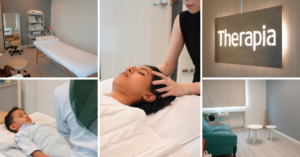
Therapia is a wellness space located at Publika Shopping Gallery in Kuala Lumpur. It provides Craniosacral Therapy as part of a broader approach to relaxation, recovery, and general well-being.
The space is designed for people who may feel physically tense, mentally busy, or simply find it difficult to fully relax in everyday life. Sessions take place in a private environment where clients can discuss what they are currently experiencing before receiving hands-on care.
Therapia approaches CST as complementary wellness care rather than a replacement for medical diagnosis or treatment.
You do not need to have a specific diagnosis to enquire about a session. If you want to explore gentle hands-on bodywork or simply create time to relax, you can first discuss your needs with the Therapia team.
Features of Therapia’s Services
Therapia offers more than Craniosacral Therapy alone. Its broader wellness approach may include gentle hands-on care, stretching, Jaw & Cranial Tension Release, upper cervical chiropractic, wellness consultations, and assessments such as EEG and HRV.
Depending on the selected service, these assessments may provide additional information related to areas such as stress, relaxation, concentration, and recovery.
Clients can discuss concerns such as:
- difficulty relaxing
- poor-quality rest
- physical tension
- fatigue
- concentration
- general stress
- interest in Craniosacral Therapy
CST sessions are performed fully clothed, so no special preparation is required. If you are unsure which service is suitable, you can contact Therapia before booking to discuss what you are looking for.
Appointments can be booked directly through WhatsApp. Simply let the Therapia team know that you are interested in Craniosacral Therapy and ask about available sessions, current fees, and suitable appointment times.